
Introduction
As sustainability transitions from being a goal to an obligation, companies are increasingly pressured to align their operations with environmental, social, and governance (ESG) standards. Regulatory frameworks such as the EU Taxonomy, CSRD (Corporate Sustainability Reporting Directive), ISSB (International Sustainability Standards Board), and TCFD (Task Force on Climate-Related Financial Disclosures) are compelling organizations to disclose accurate, timely, and transparent sustainability data. In this ever-evolving landscape, the SAP Sustainability Control Tower (SCT) stands out as a transformative platform, offering not only regulatory compliance but also actionable insights for sustainability performance.
What is SAP Sustainability Control Tower?
The SAP Sustainability Control Tower (SCT) is a cloud-based enterprise platform designed to help organizations track, manage, and enhance their ESG performance in real time. As a centralized hub for sustainability data, SCT provides real-time monitoring, automated reporting, and predictive analytics that guide both strategic decisions and operational adjustments.
Rather than serving as a simple reporting tool, SCT integrates seamlessly with both SAP and third-party systems, providing a comprehensive sustainability management solution that covers everything from greenhouse gas (GHG) tracking to green finance alignment.
Why Choose SAP Sustainability Control Tower?
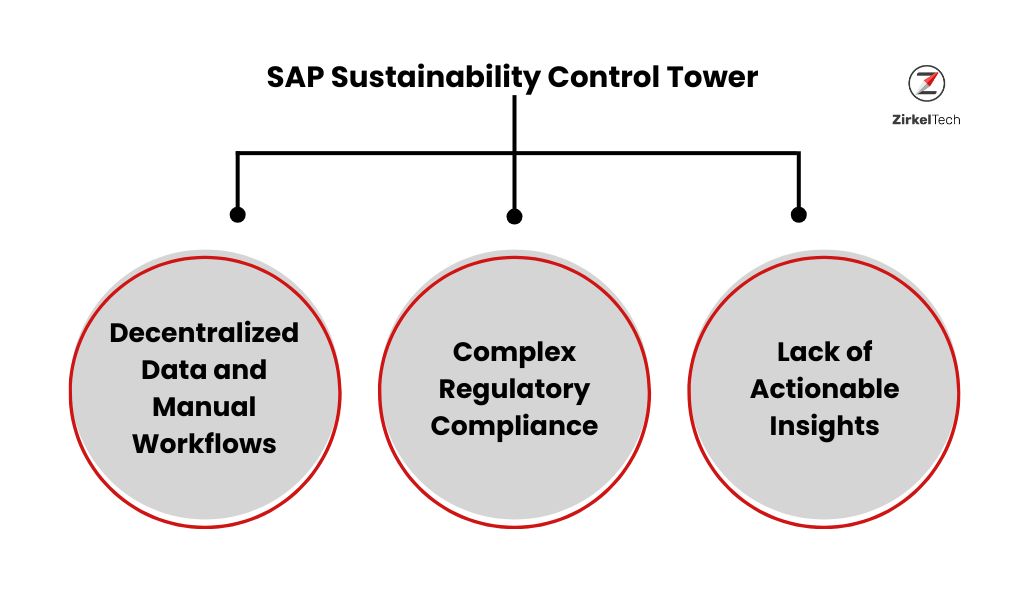
Businesses face a variety of challenges in their sustainability journey:
1.Decentralized Data and Manual Workflows
ESG-related information often resides in isolated systems and departments, leading to operational inefficiencies and inconsistent data quality
2.Complex Regulatory Compliance
Navigating global sustainability disclosure requirements can be overwhelming and time-consuming.
3.Lack of Actionable Insights:
Many organizations struggle to convert ESG data into meaningful actions that drive change.
SAP SCT addresses these issues by unifying sustainability data, automating reporting workflows, and generating actionable insights that transform regulatory compliance into a strategic advantage
The Three Pillars of SAP SCT:
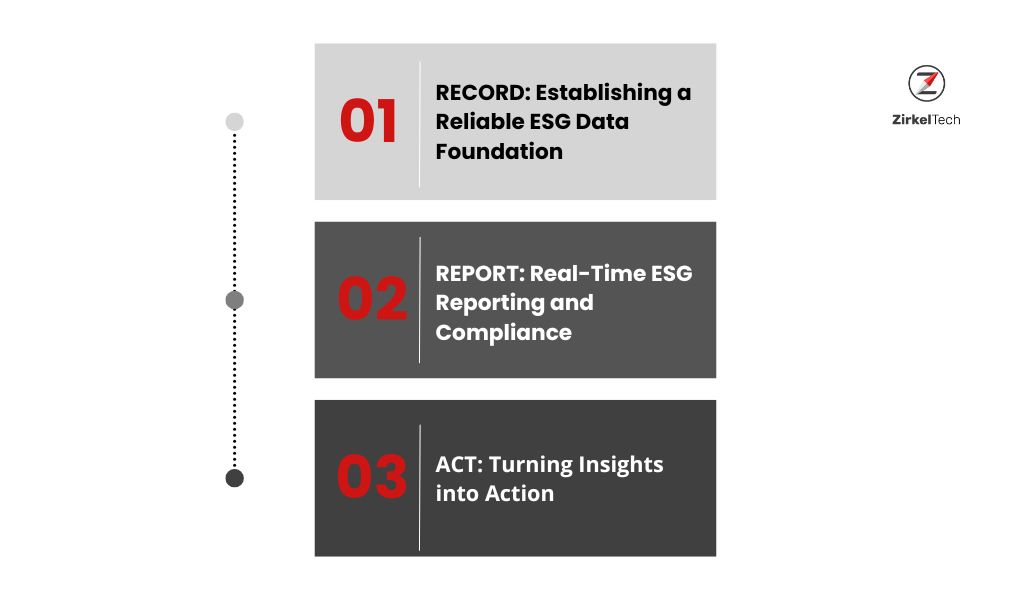
SAP SCT is architected on a robust framework encompassing three core functionalities: Record, Report, and Act. This approach ensures that ESG data is not only captured but also accurate, transparent, and actionable.
1. RECORD: Establishing a Reliable ESG Data Foundation
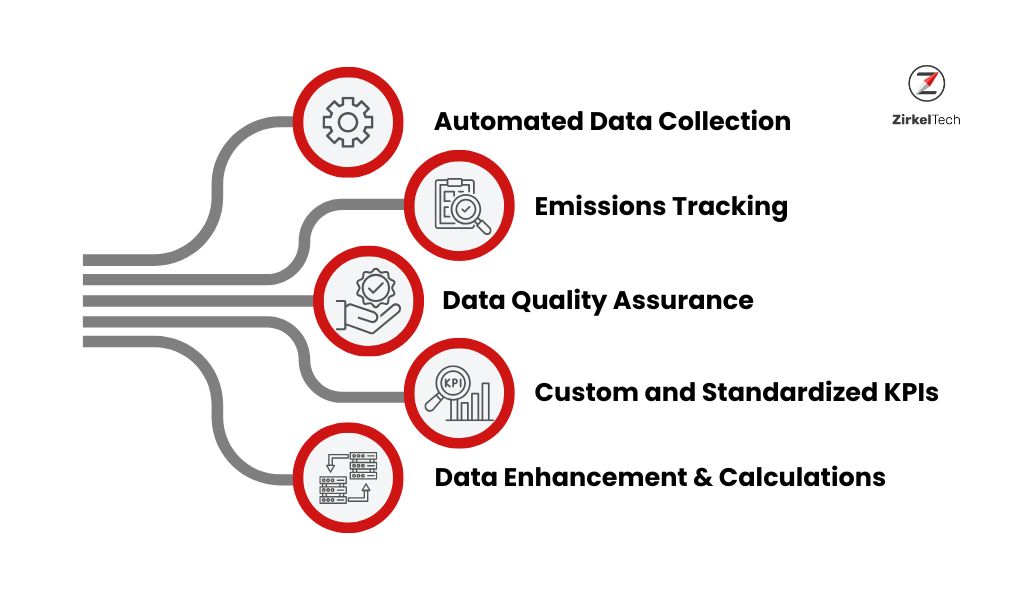
o Automated Data Collection: SCT gathers data from a wide range of sources, including SAP S/4HANA, SAP Datasphere, third-party platforms, IoT devices, and supplier networks.
o Emissions Tracking: Tracks Scope 1, 2, and 3 emissions, providing a full view of an organization’s carbon footprint, from direct emissions to supply chain impacts.
o Data Quality Assurance: Ensures the data integrity by validating completeness and consistency to meet audit standards.
o Custom and Standardized KPIs: Supports both predefined ESG metrics and custom KPIs tailored to specific business needs.
o Data Enhancement & Calculations: Uses advanced algorithms to fill in missing data and calculate emissions where necessary.
2. REPORT: Real-Time ESG Reporting and Compliance
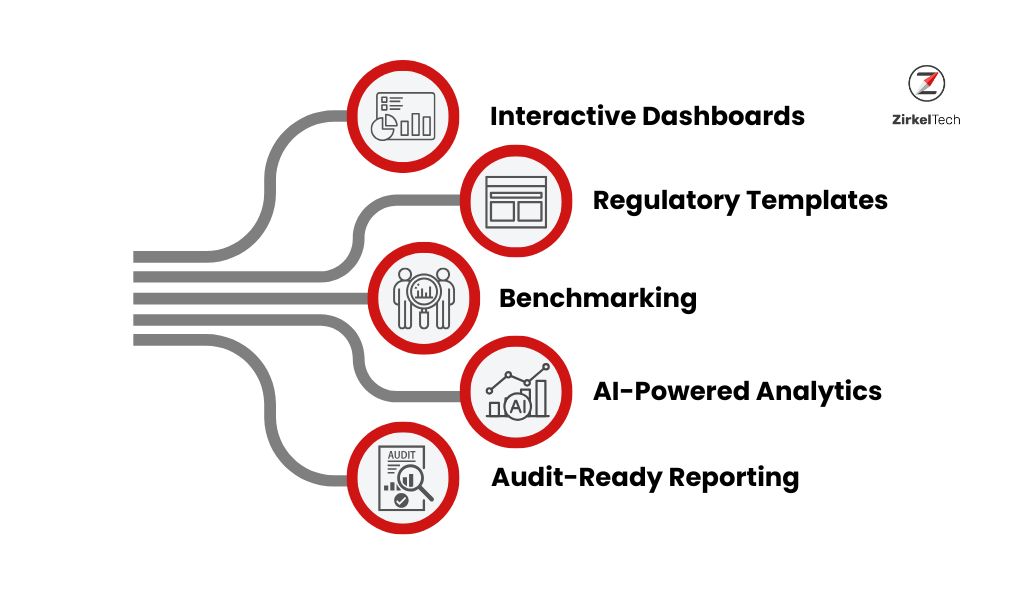
o Interactive Dashboards: Visualizes key performance indicators (KPIs) across regions and departments, with the ability to drill down into specific data.
o Regulatory Templates: Ready-to-use templates aligned with standards like CSRD, ISSB, EU Taxonomy, and TCFD, helping streamline and enhance the accuracy of sustainability reporting
o Benchmarking: Evaluates your ESG performance in relation to industry norms and regulatory benchmarks.
o AI-Powered Analytics: Detects trends, identifies risks, and forecasts future performance using machine learning models.
o Audit-Ready Reporting: Streamlines the process for preparing reports for both internal and external stakeholders.
3. ACT: Turning Insights into Action
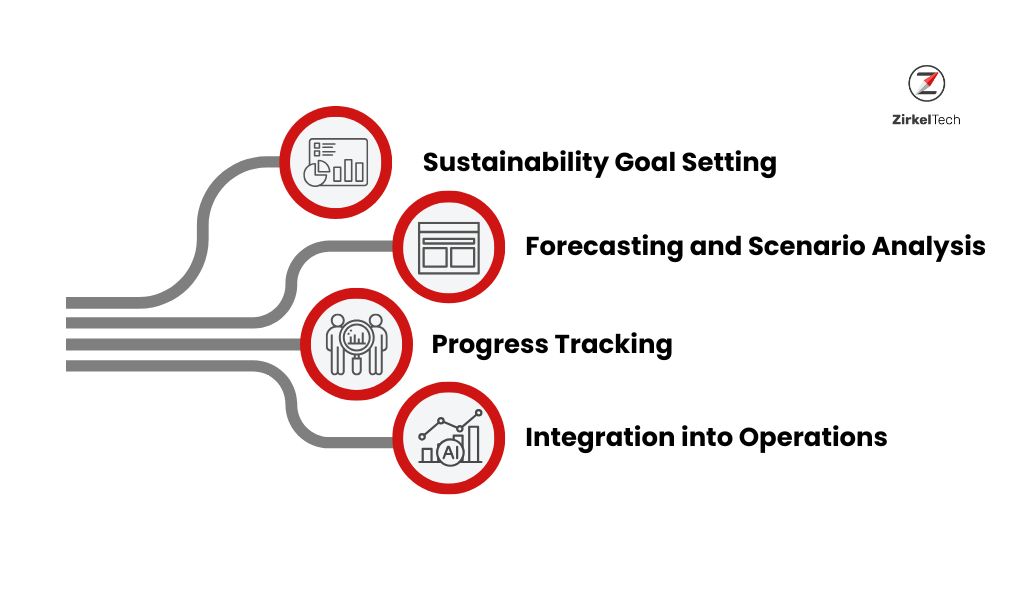
o Sustainability Goal Setting: Aligns daily operations with long-term sustainability targets.
o Forecasting and Scenario Analysis: Models different sustainability initiatives to anticipate their business impact.
o Progress Tracking: Monitors the progress of sustainability projects, measures ROI, and tracks execution.
o Integration into Operations: Embeds ESG KPIs into critical business processes, including procurement, supply chain management, and product lifecycle management.
Key Features of SAP SCT
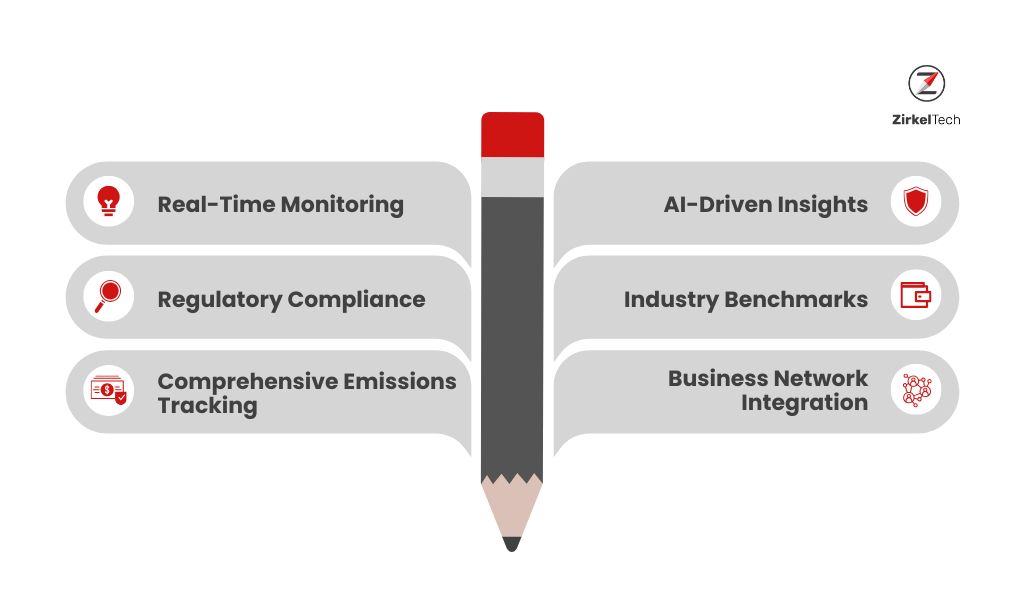
Real-Time Monitoring: Provides continuous visibility into ESG metrics across all operations globally.
Regulatory Compliance: Keeps businesses ahead of changing sustainability regulations with automated, standardized reporting.
Comprehensive Emissions Tracking: Covers the entire carbon footprint of the organization, from Scope 1 to Scope 3.
AI-Driven Insights: Helps identify opportunities for improvement and makes data-driven decisions easier.
Industry Benchmarks: Compares your ESG performance to external databases and standards.
Business Network Integration: Collaborates with partners through SAP Business Network for Sustainability to align supply chain performance with corporate ESG goals.
SAP SCT and Green Finance
Green finance connects an organization’s environmental performance with its access to investments and financial benefits. SAP SCT supports green finance initiatives by: